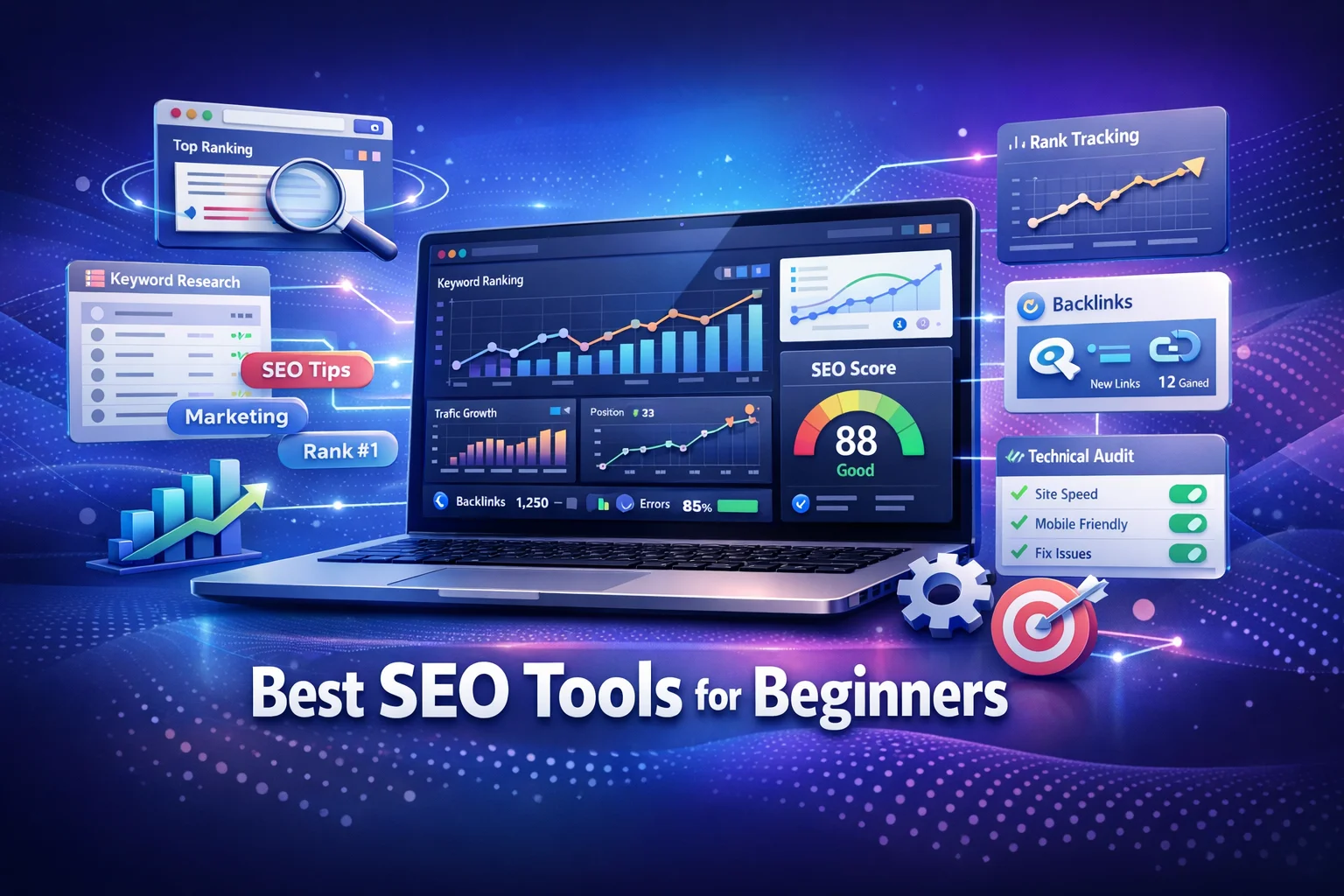
Search engine optimization (SEO) has become one of the most important digital marketing strategies for websites, bloggers, startups, and businesses. However, SEO can be complex if you rely only on guesswork. That’s why professionals use specialized SEO tools to analyze keywords, monitor rankings, track competitors, and improve website performance.
In 2026, SEO tools are more powerful than ever. Modern platforms combine keyword research, competitor analysis, backlink tracking, site auditing, and content optimization into a single dashboard, helping users make data-driven decisions instead of guessing what might work.
For beginners, the right tools can dramatically speed up the learning curve. Instead of spending months figuring out why your website isn’t ranking, SEO tools reveal exactly what needs improvement and what keywords to target.
This guide compares the best SEO tools for beginners in 2026, including both free tools and powerful paid platforms, so you can choose the right option based on your budget and goals.
Why Beginners Need SEO Tools
Many beginners assume SEO is simply about adding keywords to content. In reality, search engines analyze hundreds of factors such as:
- keyword intent
- backlinks
- technical site performance
- content quality
- competitor strategies
Without the right tools, analyzing these factors manually would take weeks.
SEO tools simplify this process by providing:
Keyword research insights
Tools help identify search terms with strong traffic potential and manageable competition.
Competitor analysis
You can analyze competitors’ keywords, backlinks, and ranking strategies.
Website audits
Many tools scan your website to detect technical issues that affect rankings.
Rank tracking
SEO platforms monitor how your keywords perform in search results over time.
For example, all-in-one platforms like Semrush allow users to analyze keyword difficulty, search volume, competitor rankings, and content opportunities in one place.
Best SEO Tools for Beginners in 2026
Below are some of the most reliable and beginner-friendly SEO tools available today.
1. Semrush (Best All-in-One SEO Tool)
Semrush is widely considered one of the most powerful SEO platforms available. It combines keyword research, competitor analysis, backlink tracking, site auditing, and content optimization in a single platform.
Many professional marketers and major brands rely on this tool to improve their search visibility and digital marketing strategies.
Key Features
Keyword Research Tools
Semrush helps identify high-value keywords with search volume, competition level, and ranking difficulty.
Competitor Analysis
You can analyze competitor websites to discover which keywords and backlinks are driving their traffic.
Site Audit Tool
The platform scans your website and detects SEO issues such as broken links, missing tags, or slow pages.
Rank Tracking
Track how your keywords perform on Google over time.
Why It’s Good for Beginners
Although it’s a professional platform, Semrush provides a clean dashboard and detailed tutorials, making it accessible even for beginners.
Pricing
Semrush is a paid tool with several subscription plans starting around $139 per month for basic features.
2. Google Search Console (Best Free SEO Tool)
Google Search Console is one of the most essential tools for anyone running a website.
Since it is developed by Google itself, the tool provides direct insights into how Google sees your website.
Key Features
Search Performance Reports
See which keywords bring traffic to your site.
Index Coverage Reports
Identify pages that Google cannot crawl or index.
Mobile Usability Reports
Detect mobile performance issues affecting rankings.
Why Beginners Should Use It
The tool is completely free and provides critical SEO insights that every website owner should monitor.
3. Ahrefs (Best for Backlink Analysis)
Ahrefs is another industry-leading SEO platform known for its massive backlink database and advanced competitor analysis features.
In fact, many SEO experts rely on Ahrefs specifically for link analysis and content research.
Key Features
Backlink Analysis
Analyze which websites link to your competitors.
Content Explorer
Find high-performing content in your niche.
Keyword Research
Identify new keyword opportunities with search volume data.
Why Beginners Like It
Ahrefs has a user-friendly interface and strong educational resources for learning SEO.
However, it is slightly expensive compared to some alternatives.
4. Ubersuggest (Best Budget SEO Tool)
Ubersuggest is a popular SEO tool designed for beginners and small businesses.
Created by digital marketer Neil Patel, the platform focuses on simplicity and affordability.
Key Features
Keyword Research
Discover search volume and competition metrics for keywords.
Site Audit Tool
Analyze your website for technical SEO issues.
Competitor Analysis
See which keywords your competitors rank for.
Why It’s Good for Beginners
The tool provides basic SEO insights at a much lower cost than most professional tools.
Some features are even available for free.
5. Moz Pro (Best Beginner-Friendly SEO Platform)
Moz has been one of the most trusted SEO brands for many years.
Its software provides an excellent introduction to professional SEO tools.
Key Features
Keyword Explorer
Find keywords with ranking potential.
Link Explorer
Analyze backlinks and domain authority.
Site Audit Tool
Detect technical SEO problems.
Why Beginners Use Moz
Moz provides educational resources and an easy-to-understand interface, making it ideal for new marketers.
6. Surfer SEO (Best for Content Optimization)
Surfer SEO is a specialized tool focused on content optimization and on-page SEO.
It analyzes the top-ranking pages for a keyword and suggests improvements to help your content rank higher.
Key Features
Content Editor
Provides real-time suggestions for optimizing articles.
Keyword Suggestions
Recommends related keywords to include in your content.
SEO Score System
Measures how well your content is optimized.
This tool is particularly useful for bloggers and content marketers.
7. Screaming Frog SEO Spider (Best Technical SEO Tool)
Screaming Frog is a website crawler that scans your website and identifies technical SEO problems.
The tool simulates how search engines crawl your website, helping you detect issues like broken links, duplicate content, or missing meta tags.
Key Features
Website Crawling
Analyze the structure of your website.
Technical SEO Audits
Identify indexing issues and redirect problems.
Data Export
Generate detailed reports for SEO analysis.
The free version allows crawling up to 500 pages.
Free vs Paid SEO Tools
Many beginners wonder whether free SEO tools are enough.
Here’s a quick comparison.
Free SEO Tools
Examples:
- Google Search Console
- free keyword tools
- limited versions of SEO platforms
Best for:
- beginners learning SEO
- small websites
Limitations:
- limited keyword data
- fewer competitor insights
Paid SEO Tools
Examples:
- Semrush
- Ahrefs
- Moz Pro
Best for:
- serious bloggers
- businesses
- SEO professionals
Benefits:
- deeper keyword research
- competitor analysis
- backlink data
- site auditing tools
Most successful websites eventually use paid tools because they provide much more detailed SEO data.
How to Choose the Right SEO Tool
The best SEO tool depends on your goals.
For beginners with no budget
Start with:
- Google Search Console
- free keyword research tools
For bloggers and small businesses
Use tools like:
- Ubersuggest
- Moz Pro
For professional SEO and digital marketing
Choose:
- Semrush
- Ahrefs
These platforms provide complete marketing insights and advanced analytics.
Final Thoughts
SEO is one of the most powerful ways to generate long-term traffic, but success depends heavily on data and strategy.
The best SEO tools simplify complex tasks such as keyword research, competitor analysis, technical audits, and content optimization. Instead of guessing what might work, you can make informed decisions based on real search data.
For beginners starting their SEO journey in 2026, a combination of free tools and beginner-friendly paid platforms is the best approach. Tools like Google Search Console provide essential insights, while professional platforms like Semrush or Ahrefs unlock deeper analytics and growth opportunities.
By choosing the right tools and consistently applying SEO best practices, beginners can gradually build stronger search visibility and sustainable organic traffic.
Frequently Asked Questions (FAQs)
1. What is the best SEO tool for beginners in 2026?
The best SEO tool for beginners in 2026 depends on your needs and budget. Many beginners start with Google Search Console because it is free and provides valuable insights directly from Google. However, for a more complete SEO strategy, tools like Semrush offer advanced features such as keyword research, competitor analysis, backlink tracking, and website audits. These tools help beginners understand how search engines work and make data-driven decisions to improve rankings.
2. Are free SEO tools enough for beginners?
Yes, free SEO tools can be enough for beginners who are just learning the basics of search engine optimization. Tools like Google Search Console and free keyword research tools provide essential insights about website performance and search traffic. However, free tools usually have limitations such as restricted keyword data or fewer competitor insights. As your website grows, upgrading to a professional SEO platform can provide deeper analysis and faster growth opportunities.
3. What features should beginners look for in an SEO tool?
Beginners should choose SEO tools that include essential features such as keyword research, site audits, rank tracking, competitor analysis, and backlink monitoring. These features help identify opportunities to improve content, optimize website performance, and analyze competitors’ strategies. A good beginner-friendly SEO tool should also have a simple dashboard and educational resources to help users learn SEO more effectively.
4. How do SEO tools help improve website rankings?
SEO tools help improve rankings by providing data and insights that guide optimization strategies. For example, keyword research tools help identify search terms people are actively looking for, while site audit tools detect technical problems such as broken links or missing metadata. Competitor analysis tools reveal which keywords and backlinks are helping other websites rank higher. By using this data, website owners can optimize their content and technical structure to improve their visibility in search engines.
5. How long does it take to see results from SEO tools?
SEO results usually take time because search engines need to crawl, index, and evaluate website changes. In most cases, beginners start noticing improvements within 3 to 6 months, depending on the competition level and content quality. SEO tools accelerate this process by helping users identify the right keywords, monitor rankings, and fix technical issues quickly. Consistent optimization and high-quality content are the key factors for long-term SEO success.