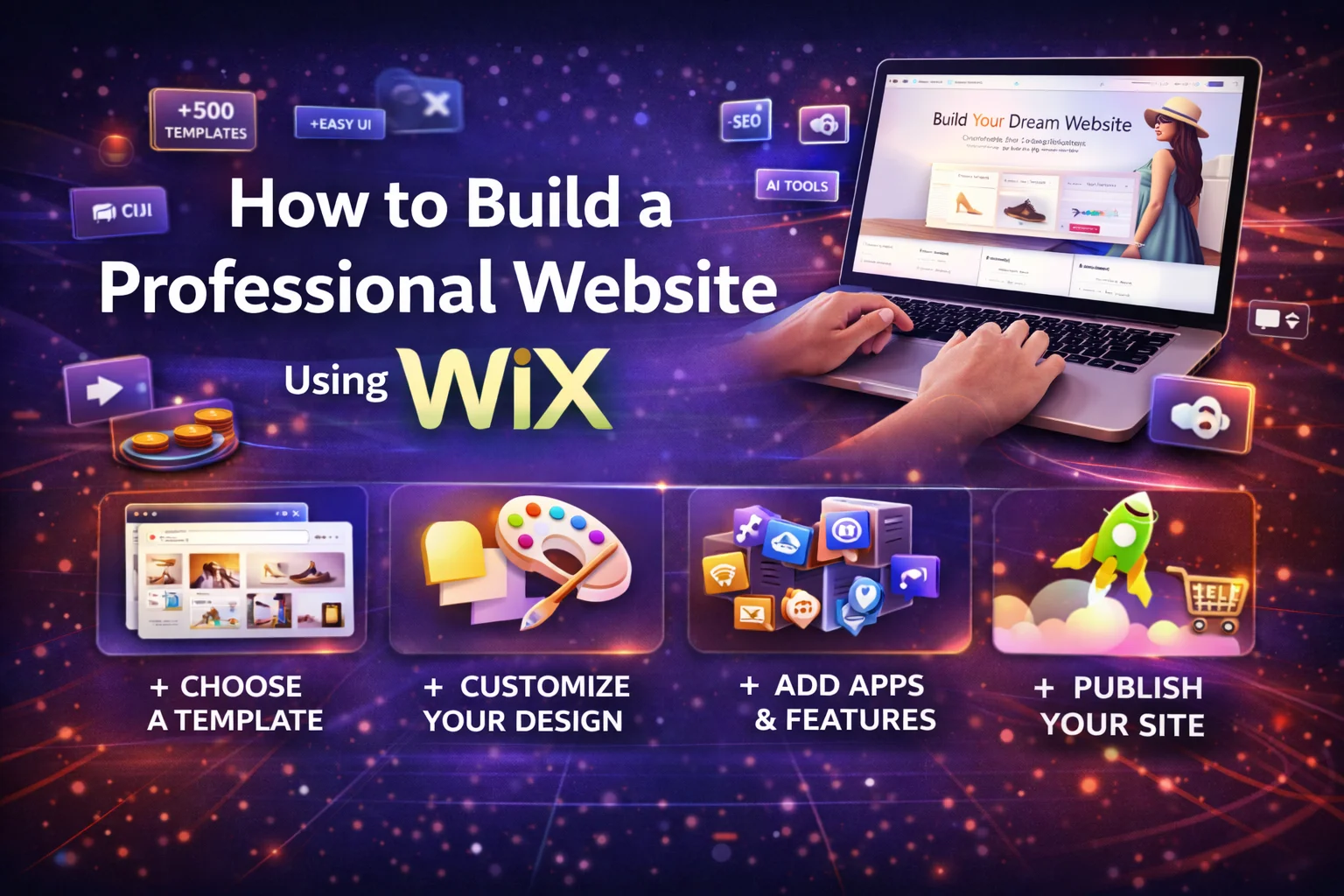
How to Build a Professional Website Using Wix (Step-by-Step Beginner Guide)

Creating a professional website used to require web developers, coding knowledge, and expensive design tools. Today, modern website builders make the process far more accessible. One of the most popular platforms for beginners and small businesses is Wix, a cloud-based website builder that allows anyone to create a full website without coding.

Wix combines hosting, design templates, SEO tools, and marketing features into one platform, making it easy to launch and manage a website from a single dashboard. The platform is widely used by freelancers, small businesses, bloggers, and entrepreneurs who want to establish an online presence quickly.

In this step-by-step guide, you’ll learn how to build a professional website using Wix, from choosing a template to optimizing your site for search engines in 2026.


Why Choose Wix to Build Your Website?

Before diving into the tutorial, it helps to understand why Wix has become one of the most widely used website builders.

1. Beginner-Friendly Design Tools

Wix offers a drag-and-drop editor that allows users to design pages visually without coding.

2. AI Website Builder

The platform includes AI tools that can generate a full website automatically based on a few questions about your business.

3. Large Template Library

Wix provides hundreds of designer-made templates for different industries, making it easy to start with a professional design.

4. Built-in SEO Tools

The platform includes built-in SEO features such as customizable meta tags, structured data, and automatic sitemaps.

5. All-in-One Platform

Wix includes hosting, security, and site management tools in a single platform, eliminating the need for separate services.


Step 1: Create Your Wix Account

The first step in building your website is creating a Wix account.

  1. Visit the Wix website
  2. Click Get Started
  3. Sign up using email or Google login

Once your account is created, Wix will guide you through a setup process to understand your website goals.

You’ll typically be asked questions about:

  • your website type (business, blog, portfolio, store)
  • your design preferences
  • the features you need

These answers help Wix generate initial design suggestions.


Step 2: Choose How You Want to Build Your Website

Wix offers two main ways to build your website.

Option 1: Wix AI Website Builder

The AI website builder asks a few questions about your site and automatically creates a layout based on your responses.

The process typically includes:

  1. Answering questions about your business
  2. Selecting design preferences
  3. Generating a complete website draft

This approach is the fastest way to launch a website.

Option 2: Choose a Template

If you prefer full control over your design, you can choose a template instead.

Wix provides templates for many industries including:

  • business websites
  • ecommerce stores
  • portfolios
  • blogs
  • restaurants

Templates can be fully customized once selected.


Step 3: Customize Your Website Design

After selecting a template or generating an AI site, the next step is customization.

The Wix editor allows you to modify:

  • text and headings
  • images and videos
  • color schemes
  • fonts and layouts

Because the editor uses drag-and-drop functionality, you can move elements around the page easily.

Important Design Tips

To create a professional website:

  • Use a consistent color palette
  • Keep fonts simple and readable
  • Avoid cluttered layouts
  • Use high-quality images

Design consistency helps build trust with visitors.


Step 4: Add Essential Website Pages

Every professional website should include several key pages.

Home Page

The home page introduces visitors to your brand and explains what you offer.

About Page

The about page builds credibility by explaining your story and expertise.

Services or Products Page

This page showcases what you sell or offer.

Contact Page

The contact page should include:

  • email address
  • contact form
  • phone number
  • location or map

Blog (Optional)

A blog allows you to publish helpful content that improves your SEO and attracts visitors.


Step 5: Add Features and Integrations

Wix includes an App Market where you can add additional functionality to your website.

Popular Wix apps include:

  • booking systems
  • live chat tools
  • email marketing tools
  • social media integrations
  • ecommerce features

These integrations allow you to expand your website’s functionality as your business grows.


Step 6: Optimize Your Website for SEO

Search engine optimization (SEO) helps your website appear in search results.

Wix provides several built-in SEO tools that make optimization easier.

These tools allow you to customize:

  • page titles
  • meta descriptions
  • URLs
  • alt text for images

The platform also generates a sitemap automatically and allows advanced SEO settings like robots.txt editing.

Basic SEO Best Practices

  • Use relevant keywords in titles and headings
  • Write clear meta descriptions
  • Optimize images for fast loading
  • ensure your website is mobile-friendly

SEO optimization helps your website attract organic traffic from search engines.


Step 7: Add a Custom Domain

By default, free Wix websites use a Wix subdomain such as:

username.wixsite.com/sitename

For a professional website, you should connect a custom domain.

Examples include:

  • yourbusiness.com
  • yourbrand.net

Custom domains improve branding and credibility.

Wix premium plans typically include a free domain for the first year.


Step 8: Set Up Mobile Optimization

Most internet users browse websites on mobile devices.

Wix automatically creates mobile versions of websites, but you should review the mobile layout manually.

In the Wix editor you can switch to mobile view and adjust elements specifically for mobile devices.

Ensure that:

  • text remains readable
  • buttons are easy to tap
  • images load quickly

Mobile optimization is also an important Google ranking factor.


Step 9: Test Your Website Before Publishing

Before launching your website, test it thoroughly.

Check:

  • page loading speed
  • navigation links
  • contact forms
  • mobile display
  • image quality

Testing ensures visitors have a smooth experience when they first visit your website.


Step 10: Publish Your Website

Once everything looks good, you can publish your site.

Simply click Publish in the Wix editor.

Your website will then be live and accessible to visitors around the world.

After publishing, you can continue updating your website anytime.


How to Maintain and Grow Your Wix Website

Launching a website is only the first step. Ongoing maintenance and updates are essential for long-term success.

Regular Content Updates

Publishing blog posts and updating pages improves SEO and keeps visitors engaged.

Website Analytics

Wix includes built-in analytics tools that help track:

  • website traffic
  • visitor behavior
  • conversion rates

Marketing Tools

Wix also provides marketing tools such as:

  • email campaigns
  • social media integrations
  • SEO reports

These tools help grow your website audience over time.


Common Mistakes Beginners Should Avoid

Many beginners make simple mistakes when building their first website.

Overloading Pages With Too Much Content

Simple and clean layouts work best.

Ignoring SEO

Without SEO optimization, your website may struggle to attract visitors.

Using Low-Quality Images

High-quality visuals improve the professional appearance of your website.

Skipping Mobile Optimization

Always test how your website looks on smartphones.

Avoiding these mistakes can significantly improve your website’s success.


Final Thoughts

Building a professional website no longer requires coding skills or expensive development teams. Platforms like Wix have simplified the process by combining website design, hosting, and marketing tools in one platform.

By following the steps in this guide—creating an account, choosing a template, customizing your design, adding content, and optimizing for SEO—you can launch a professional website quickly and efficiently.

For beginners, Wix offers one of the easiest ways to create a modern website that looks professional and performs well online.

With consistent updates and proper SEO strategies, your Wix website can become a powerful platform for growing your brand, business, or personal project.

FAQ’s

1. Is Wix good for building a professional website?

Yes, Wix is one of the best website builders for beginners because it offers drag-and-drop design tools, ready-made templates, built-in hosting, and SEO features that help users create professional websites without coding.


2. How long does it take to build a website with Wix?

Most beginners can build a basic Wix website in a few hours. More advanced websites with custom pages, content, and SEO optimization may take a few days to complete.


3. Can I build a website on Wix for free?

Yes, Wix offers a free plan that allows users to build a website using a Wix subdomain. However, upgrading to a premium plan allows you to connect a custom domain and remove Wix branding.


4. Is Wix better than WordPress for beginners?

Wix is often easier for beginners because it includes hosting, templates, and design tools in one platform. WordPress offers more customization but requires more technical setup.


5. Do Wix websites rank well on Google?

Yes, Wix websites can rank well on Google if they follow SEO best practices such as keyword optimization, fast loading speed, mobile responsiveness, and quality content.
Wix vs WordPress: Is Wix Better Than WordPress for Building a Website in 2026?

Choosing the right platform is one of the most important decisions when building a website. Two of the most popular options today are Wix and WordPress. Both allow users to create websites without extensive coding knowledge, but they are designed for different types of users and goals.

Wix focuses on simplicity and an all-in-one website builder experience, while WordPress offers unmatched customization and flexibility through its open-source ecosystem. Understanding the differences between these platforms can help you decide which one is better for your website in 2026.

In this detailed guide, we’ll compare Wix and WordPress based on ease of use, design flexibility, SEO capabilities, pricing, scalability, and overall performance to determine whether Wix is truly better than WordPress for building a website.


What Is Wix?

Wix is a cloud-based website builder that allows users to create websites using a drag-and-drop editor. The platform includes hosting, security, templates, and marketing tools in a single package.

One of Wix’s biggest advantages is its simplicity. Users can create a professional website quickly without worrying about hosting or technical setup because everything is built into the platform.

Key Wix features include:

  • Drag-and-drop website editor
  • AI website creation tools
  • Built-in hosting and security
  • App marketplace for integrations
  • Ecommerce functionality

Because of its intuitive interface, Wix is widely considered one of the easiest website builders for beginners.


What Is WordPress?

WordPress is an open-source content management system (CMS) that powers more than 40% of websites worldwide.

Unlike Wix, WordPress does not include hosting or design tools by default. Instead, users install WordPress on a web hosting server and customize their site using themes and plugins.

The platform offers thousands of plugins and themes that allow users to create nearly any type of website.

Key WordPress features include:

  • Open-source platform
  • Thousands of themes
  • 50,000+ plugins
  • Full control over website code
  • Extensive customization options

Because of this flexibility, WordPress is often used by bloggers, businesses, ecommerce stores, and developers who need advanced functionality.


Wix vs WordPress: Quick Comparison

FeatureWixWordPress
Ease of useVery beginner-friendlyModerate learning curve
HostingIncludedRequires separate hosting
CustomizationLimited compared to WordPressUnlimited customization
Plugins/appsHundreds of apps50,000+ plugins
SEO controlGood built-in toolsAdvanced control
Best forBeginnersScalable websites

Both platforms can build excellent websites, but they serve different user needs.


Ease of Use: Which Platform Is Easier?

Ease of use is one of the biggest differences between Wix and WordPress.

Wix

Wix is designed specifically for beginners. Its drag-and-drop editor allows users to visually design pages by placing elements anywhere on the screen.

The platform also includes AI tools that can generate a website automatically after answering a few questions.

Because hosting and maintenance are included, Wix eliminates the need for technical setup.

WordPress

WordPress has a steeper learning curve because users must:

  • purchase hosting
  • install WordPress
  • choose themes and plugins
  • manage updates and security

However, page builders such as Elementor make WordPress easier to use by adding drag-and-drop design capabilities.

Ease of Use Verdict

For beginners, Wix is easier to use because everything is integrated and requires minimal technical knowledge.


Design and Customization

Customization is where WordPress has a significant advantage.

Wix Design Options

Wix provides over 800 templates for different industries. These templates are customizable, but once you choose a template, switching to another one later is difficult.

The platform also includes an app marketplace with hundreds of integrations.

WordPress Design Options

WordPress offers thousands of themes and plugins that allow users to customize every aspect of their website.

Developers can also modify code directly using HTML, CSS, and JavaScript.

Because of this flexibility, WordPress provides far more design control than Wix.

Design Verdict

WordPress wins for customization because it allows virtually unlimited design possibilities.


SEO Capabilities

Search engine optimization (SEO) is crucial for website visibility.

Wix SEO Tools

Wix has significantly improved its SEO capabilities in recent years. It now includes features such as:

  • meta tag editing
  • SEO setup guides
  • automatic sitemaps
  • mobile-optimized templates

These tools make SEO easier for beginners.

WordPress SEO Tools

WordPress offers deeper SEO control because users can install powerful plugins such as:

  • Yoast SEO
  • Rank Math
  • All in One SEO

WordPress also allows full control over URL structure, schema markup, and technical SEO settings.

SEO Verdict

While Wix offers solid SEO tools, WordPress provides more advanced SEO flexibility.


Pricing Comparison

Pricing is another important factor when choosing a website platform.

Wix Pricing

Wix uses a subscription model that includes hosting and support.

Plans typically range from:

  • Free plan with Wix branding
  • $16–$159 per month depending on features

WordPress Pricing

WordPress software itself is free, but users must pay for:

  • hosting
  • domain name
  • premium themes or plugins

Hosting can cost just a few dollars per month, making WordPress potentially cheaper than Wix.

Pricing Verdict

WordPress can be more affordable in the long run, especially for larger websites.


Scalability and Growth

If you plan to expand your website in the future, scalability becomes important.

Wix Scalability

Wix works well for small websites, portfolios, and small businesses. However, larger websites may encounter limitations in customization and performance.

WordPress Scalability

WordPress is highly scalable because it allows users to add custom functionality through plugins and code.

This makes it ideal for:

  • large blogs
  • membership websites
  • ecommerce platforms
  • enterprise websites

WordPress is often recommended for businesses planning long-term growth.

Scalability Verdict

WordPress is the better platform for large and complex websites.


Pros and Cons

Wix Pros

  • Extremely beginner-friendly
  • Drag-and-drop website builder
  • All-in-one platform with hosting included
  • Fast setup process

Wix Cons

  • Limited customization compared to WordPress
  • Harder to migrate away from the platform
  • Monthly subscription costs

WordPress Pros

  • Unlimited customization
  • Large plugin ecosystem
  • Advanced SEO capabilities
  • Better scalability for growing websites

WordPress Cons

  • Requires hosting setup
  • Steeper learning curve
  • Maintenance and updates required

Which Platform Should You Choose?

Choosing between Wix and WordPress depends on your goals.

Choose Wix if:

  • You want to build a website quickly
  • You prefer an easy drag-and-drop editor
  • You do not want to manage hosting or technical setup

Choose WordPress if:

  • You want full control over your website
  • You plan to scale your website in the future
  • You need advanced features and customization

Final Verdict: Is Wix Better Than WordPress?

The answer depends on your experience and website goals.

Wix is better for beginners who want a simple and quick way to build a website without dealing with technical setup. WordPress, on the other hand, provides significantly more customization, scalability, and control.

For small personal websites or portfolios, Wix may be the easiest solution. But for businesses, blogs, and large projects that require long-term growth, WordPress is often the better platform.

Ultimately, the best website builder is the one that aligns with your technical skills, business goals, and future growth plans.

FAQ’s

1. Is Wix better than WordPress for beginners?

Wix is often easier for beginners because it offers a drag-and-drop editor and built-in hosting. WordPress requires more setup but provides greater flexibility and customization.


2. Which platform is better for SEO: Wix or WordPress?

WordPress is generally better for SEO because it offers advanced plugins, greater technical control, and more customization options. Wix has improved its SEO tools but still has fewer advanced features.


3. Is Wix cheaper than WordPress?

Wix offers subscription plans that include hosting and support, while WordPress itself is free but requires hosting and premium plugins. Depending on hosting costs, WordPress can sometimes be cheaper in the long run.


4. Can I migrate from Wix to WordPress?

Yes, it is possible to migrate a website from Wix to WordPress, but the process can require rebuilding parts of the site because the platforms use different systems.


5. Which platform is better for small business websites?

Both Wix and WordPress can work well for small business websites. Wix is easier to manage for beginners, while WordPress is better for businesses that want advanced customization and long-term scalability.

Wix vs Squarespace Comparison: Which Platform Should Beginners Choose?

Building a professional website used to require coding knowledge and expensive development services. Today, modern website builders allow anyone to create a fully functional site without writing a single line of code. Among the most popular platforms, Wix and Squarespace consistently rank among the top website builders for beginners.

Both platforms offer drag-and-drop editing, ready-made templates, built-in hosting, and integrated SEO tools. However, their design philosophy, customization options, and pricing structures differ in important ways.

This guide compares Wix and Squarespace in depth based on ease of use, features, design, SEO capabilities, pricing, and overall beginner experience. By the end, you’ll know which platform is better for starting a website in 2026.


What Are Wix and Squarespace?

Before comparing them, it’s important to understand what these platforms are.

Both Wix and Squarespace are software-as-a-service (SaaS) website builders, meaning they provide everything required to build and manage a website in one platform—hosting, templates, security, and editing tools.

They are designed specifically for users who want to create websites without coding knowledge.

Wix Overview

Wix was launched in 2006 and has grown into one of the most widely used website builders. The platform provides a drag-and-drop editor, AI design tools, and more than 900 templates.

It is particularly known for its flexibility and large app marketplace, allowing users to extend website functionality with integrations.

Squarespace Overview

Squarespace, founded in 2003, focuses on high-quality design and simplicity. Its templates are known for their clean layouts and professional aesthetic.

The platform also integrates ecommerce tools, blogging features, analytics, and marketing tools within a single dashboard.


Quick Comparison: Wix vs Squarespace

FeatureWixSquarespace
Ease of useVery beginner-friendlyStructured and simple
Templates900+ templates180+ professional templates
Design flexibilityHighly customizableStructured layouts
App integrations500+ appsLimited extensions
Free planYesNo (14-day trial)
EcommerceStrongStrong
Best forBeginners & flexibilityDesign-focused websites

Both builders are beginner-friendly, but their strengths differ depending on the type of website you want to build.


Ease of Use: Which Is Better for Beginners?

Ease of use is often the most important factor when choosing a website builder.

Wix: Drag-and-Drop Freedom

Wix offers one of the most flexible editors available. Users can place elements anywhere on the page using its drag-and-drop interface.

Key beginner features include:

  • AI website builder (Wix ADI)
  • visual drag-and-drop editing
  • pre-designed layouts
  • guided onboarding

The platform also includes an AI tool that can generate a website automatically based on a few questions about your business.

This makes Wix especially beginner-friendly for users who want to launch a website quickly.

Squarespace: Structured Editing

Squarespace uses a grid-based editor called Fluid Engine, which keeps page layouts aligned and visually balanced.

Instead of placing elements freely, users add sections and blocks that automatically adjust to maintain design consistency.

Many beginners find this approach easier because it prevents design mistakes.

Ease of Use Verdict

  • Wix provides more freedom and customization
  • Squarespace provides more structured and polished layouts

For beginners who want simplicity and quick results, both are excellent options. However, Wix’s drag-and-drop flexibility gives it a slight advantage.


Templates and Design Quality

Design plays a major role in how visitors perceive your website.

Wix Templates

Wix offers over 900 templates covering industries such as:

  • restaurants
  • portfolios
  • online stores
  • blogs
  • service businesses

These templates can be customized extensively, allowing users to modify layouts, colors, and elements.

Squarespace Templates

Squarespace provides fewer templates—around 180—but they are widely praised for their professional quality and aesthetics.

Many designers prefer Squarespace because its templates are visually polished and optimized for branding.

In fact, Squarespace is often considered one of the best platforms for creative professionals such as photographers and designers.

Design Verdict

  • Wix: more templates and flexibility
  • Squarespace: better design quality

If design aesthetics are your top priority, Squarespace may be the better choice.


Features and Customization

Both platforms provide extensive features for building websites, but Wix offers more customization options.

Wix Features

Wix includes:

  • large app marketplace (500+ apps)
  • AI design tools
  • booking systems
  • membership features
  • live chat and marketing tools

These integrations allow Wix users to extend their websites with additional functionality.

Squarespace Features

Squarespace focuses on built-in tools instead of third-party integrations.

Key features include:

  • ecommerce tools
  • blogging platform
  • email marketing
  • analytics dashboard
  • social media integration

Squarespace’s built-in approach keeps the platform streamlined but limits customization.

Features Verdict

  • Wix: stronger customization and integrations
  • Squarespace: simpler all-in-one platform

SEO Tools Comparison

Search engine optimization is essential for website visibility.

Both platforms include built-in SEO tools that allow users to optimize:

  • page titles
  • meta descriptions
  • URLs
  • image alt text

Wix SEO Features

Wix provides several beginner-friendly SEO tools including:

  • SEO setup checklist
  • automated sitemap creation
  • structured SEO guidance

The platform also offers SEO apps that expand optimization capabilities.

Squarespace SEO Features

Squarespace includes built-in SEO features such as:

  • automatic sitemaps
  • clean URLs
  • mobile-responsive templates
  • integrated analytics

Because its templates are well-structured, Squarespace websites often load quickly and perform well technically.

SEO Verdict

Both platforms provide solid SEO tools, but Wix offers more advanced customization and integrations.


Ecommerce Capabilities

Many beginners use website builders to create online stores.

Wix Ecommerce

Wix supports ecommerce features such as:

  • product listings
  • digital products
  • subscription sales
  • multiple payment gateways

It also supports more than 80 payment providers, making it highly flexible for online stores.

Squarespace Ecommerce

Squarespace also includes built-in ecommerce tools such as:

  • inventory management
  • product variants
  • subscription products
  • integrated checkout

Some plans also charge transaction fees depending on the pricing tier.

Ecommerce Verdict

Wix generally offers more flexibility for ecommerce, especially for beginners launching small online stores.


Pricing Comparison

Pricing is another important factor for beginners.

Wix Pricing

Wix offers a free plan, which allows users to create websites with Wix branding.

Paid plans typically start around $17 per month when billed annually.

Squarespace Pricing

Squarespace does not offer a free plan but provides a 14-day free trial.

Paid plans start around $16 per month with annual billing.

Pricing Verdict

  • Wix: free plan available
  • Squarespace: slightly cheaper entry pricing

For beginners testing website creation, Wix’s free plan can be a major advantage.


Pros and Cons

Wix Pros

  • Extremely flexible drag-and-drop editor
  • 900+ templates
  • Large app marketplace
  • Free plan available
  • strong ecommerce capabilities

Wix Cons

  • Too many customization options may overwhelm beginners
  • Some templates cannot be switched easily

Squarespace Pros

  • Beautiful professional templates
  • Clean and simple interface
  • strong blogging tools
  • built-in marketing features

Squarespace Cons

  • Limited integrations
  • No free plan
  • less customization flexibility

Which Platform Is Better for Beginners?

Choosing between Wix and Squarespace depends on your goals.

Choose Wix if:

  • You want maximum customization
  • You prefer drag-and-drop editing
  • You need many integrations and apps
  • You want a free website builder

Choose Squarespace if:

  • Design quality is your top priority
  • You want a simple and structured editor
  • You are building a portfolio or creative website

For most beginners, Wix is often considered the better overall choice due to its flexibility and wide range of features.

However, Squarespace remains an excellent option for users focused on professional design and branding.


Final Verdict

Both Wix and Squarespace are excellent website builders for beginners in 2026. They offer user-friendly interfaces, powerful design tools, and integrated SEO features that make building a website easier than ever.

Wix stands out for its flexibility, large template library, and extensive app marketplace. Squarespace excels in design quality, simplicity, and professional presentation.

If your priority is ease of use and customization, Wix is likely the better choice. But if you want a visually polished website with minimal design effort, Squarespace may be the perfect platform.

Ultimately, the best website builder depends on your goals, design preferences, and how much control you want over your website.

FAQ’s

1. Is Wix better than Squarespace for beginners?

Wix is often considered better for beginners because of its drag-and-drop editor, flexible design options, and beginner-friendly onboarding. Squarespace, however, offers more structured layouts and professional design templates.


2. Which website builder is easier to use: Wix or Squarespace?

Both platforms are beginner-friendly, but Wix offers more design flexibility with its drag-and-drop editor, while Squarespace uses a structured grid system that helps maintain clean layouts.


3. Is Wix cheaper than Squarespace?

Wix offers a free plan, which makes it cheaper for beginners who want to test the platform. Squarespace does not offer a free plan but provides a 14-day free trial.


4. Which platform is better for SEO: Wix or Squarespace?

Both Wix and Squarespace offer strong SEO features such as customizable meta tags, clean URLs, and mobile-responsive designs. Wix provides more SEO apps and customization options, while Squarespace offers built-in SEO tools.


5. Should I choose Wix or Squarespace for a small business website?

For small business websites, Wix is often preferred due to its flexibility, large app marketplace, and strong ecommerce capabilities. Squarespace is ideal for businesses that prioritize design and branding.


Best Website Builders for Small Businesses in 2026: Wix vs Squarespace vs WordPress

Creating a professional website is no longer optional for small businesses—it’s essential. In 2026, customers expect every business to have a fast, mobile-friendly, and trustworthy online presence. Whether you run a local service, an online store, or a consulting business, the right website builder can significantly impact your visibility and growth.

Among dozens of available platforms, three tools consistently dominate the market: Wix, Squarespace, and WordPress. Each offers unique strengths, from beginner-friendly design tools to advanced customization and SEO capabilities.

This guide compares these three platforms based on ease of use, features, pricing, SEO performance, scalability, and business use cases to help you choose the best website builder for your small business in 2026.


Why Choosing the Right Website Builder Matters

Your website builder affects far more than just design. It influences:

  • Website speed and user experience
  • Search engine visibility
  • Online store functionality
  • Marketing integrations
  • Long-term scalability

Modern website builders include built-in tools such as hosting, SEO optimization, analytics, and ecommerce capabilities, making them ideal for businesses without a full development team.

However, each platform has different strengths depending on your goals.


Quick Comparison: Wix vs Squarespace vs WordPress

FeatureWixSquarespaceWordPress
Ease of UseVery beginner-friendlyEasy but structuredModerate learning curve
CustomizationHigh flexibilityModerateUnlimited
SEO PotentialGoodGoodExcellent
Templates900+ designsHigh-quality designer templatesThousands of themes
EcommerceBuilt-in toolsStrong ecommercePlugin-based
PricingFree + paid plansPaid plans onlyFree software + hosting
ScalabilityMediumMediumVery high

In simple terms:

  • Wix: Best for beginners
  • Squarespace: Best for design-focused websites
  • WordPress: Best for scalability and SEO

Wix: Best Website Builder for Beginners

Wix is one of the most popular all-in-one website builders for small businesses. It offers a drag-and-drop editor, AI website creation tools, and built-in hosting, allowing users to launch a website in just a few hours.

Industry testing in 2026 frequently ranks Wix as the best overall website builder due to its balance of usability, customization, and business features.

Key Features

  • Drag-and-drop visual editor
  • AI website builder (Wix ADI)
  • Built-in hosting and security
  • App marketplace with hundreds of integrations
  • Ecommerce tools and payment gateways

The platform allows users to design pages freely with fewer layout restrictions compared to many other builders.

Pricing

Wix offers a free plan with Wix branding, while paid plans typically start around $17/month for business websites.

Pros

  • Extremely easy to use
  • Hundreds of templates
  • AI design assistance
  • Built-in marketing tools

Cons

  • Limited flexibility compared to WordPress
  • Switching templates later can be difficult
  • Large websites may become harder to manage

Best For

  • Local businesses
  • Freelancers
  • Service-based companies
  • Beginners with no technical experience

Squarespace: Best for Beautiful Website Design

Squarespace is known for its high-quality templates and professional design system. Many creative professionals, agencies, and small brands prefer Squarespace because it produces visually polished websites with minimal effort.

The platform uses the Fluid Engine editor, which provides grid-based customization and pixel-level control while maintaining clean design structure.

Key Features

  • Award-winning templates
  • Built-in blogging system
  • Integrated ecommerce tools
  • Marketing and analytics tools
  • Unlimited bandwidth on paid plans

Squarespace includes many features directly within the platform, reducing the need for third-party plugins.

Pricing

Squarespace plans typically range from $16 to $99 per month, depending on features and ecommerce capabilities.

Pros

  • Professional, designer-quality templates
  • Built-in ecommerce tools
  • Strong blogging capabilities
  • All-in-one platform (hosting, security, analytics)

Cons

  • Less customization compared to WordPress
  • No free plan
  • Fewer integrations than Wix

Best For

  • Creative businesses
  • Photographers and designers
  • Personal brands
  • Small ecommerce stores

WordPress: Best for SEO and Scalability

WordPress powers over 40% of websites worldwide, making it the most widely used content management system.

Unlike Wix and Squarespace, WordPress is an open-source platform, meaning you have complete control over your website’s design, functionality, and hosting.

Key Features

  • 50,000+ plugins
  • Thousands of themes
  • Full code customization
  • Advanced SEO capabilities
  • Scalable for large websites

WordPress stands out because it offers unmatched flexibility and customization, making it ideal for businesses planning long-term growth.

Pricing

WordPress software itself is free, but you need to pay for:

  • Hosting
  • Domain name
  • Premium themes or plugins

This usually costs $5 to $30 per month depending on your hosting provider.

Pros

  • Unlimited customization
  • Best SEO potential
  • Massive plugin ecosystem
  • Ideal for scaling businesses

Cons

  • Requires technical setup
  • Maintenance and updates needed
  • Slight learning curve

Best For

  • Businesses planning to scale
  • SEO-focused websites
  • Blogs and content marketing
  • Custom web projects

SEO Comparison: Which Platform Ranks Best?

Search engine optimization (SEO) is critical for small businesses trying to attract organic traffic.

WordPress

WordPress provides the strongest SEO capabilities because of plugins like Yoast SEO, Rank Math, and advanced technical control.

Wix

Wix has significantly improved its SEO tools in recent years and now includes built-in optimization features, site speed improvements, and structured SEO settings.

Squarespace

Squarespace also includes built-in SEO features but offers fewer advanced customization options than WordPress.

Verdict

  1. WordPress — best SEO control
  2. Wix — beginner-friendly SEO tools
  3. Squarespace — good but limited flexibility

Ease of Use Comparison

If you want to launch a website quickly without coding, usability matters.

Wix

The drag-and-drop editor allows anyone to design a website visually, making Wix the easiest platform for beginners.

Squarespace

Squarespace has a structured editor that balances ease of use with clean design.

WordPress

WordPress offers powerful tools but requires some learning and configuration.

Verdict

  • Easiest: Wix
  • Balanced: Squarespace
  • Advanced: WordPress

Which Website Builder Is Best for Small Businesses?

The best platform depends on your business goals.

Choose Wix if:

  • You want a simple drag-and-drop builder
  • You need a website quickly
  • You have no technical skills

Choose Squarespace if:

  • Design quality matters most
  • You want an all-in-one solution
  • Your website is portfolio or brand-focused

Choose WordPress if:

  • You want complete control
  • SEO is your priority
  • You plan to scale your business online

Final Verdict

In 2026, Wix, Squarespace, and WordPress remain the top website builders for small businesses, but they serve different needs.

  • Wix: Best overall for beginners and quick website launches
  • Squarespace: Best for visually stunning websites and creatives
  • WordPress: Best for scalability, customization, and SEO

If your goal is long-term growth and search traffic, WordPress remains the most powerful option. However, for simplicity and speed, Wix and Squarespace offer excellent all-in-one solutions.

Ultimately, the best website builder is the one that matches your technical skills, business goals, and growth plans.


Frequently Asked Questions

What is the best website builder for small businesses in 2026?

Wix is widely considered the best all-around website builder due to its ease of use, AI tools, and all-in-one features for small businesses.

Is WordPress better than Wix?

WordPress offers more customization and better SEO potential, while Wix is easier to use for beginners.

Which platform is cheaper?

WordPress can be cheaper initially because the software is free, but hosting and plugins may add costs.

Can I switch website builders later?

Yes, but migrating from Wix or Squarespace to WordPress can require rebuilding parts of your website.

Wix Review 2026: Best Website Builder for Beginners and Small Businesses?

Building a website used to require technical knowledge, coding skills, and expensive development services. Today, website builders have changed that completely. Modern platforms allow anyone to create professional websites with drag-and-drop editors, ready-made templates, and integrated hosting.

Among these platforms, Wix has become one of the most recognized website builders globally. Millions of users rely on Wix to create blogs, business websites, online stores, and portfolios without writing a single line of code.

But popularity alone does not automatically make a platform the best option. With strong competitors such as Squarespace and WordPress-based solutions, many beginners wonder whether Wix is still the right choice in 2026.

In this detailed review, we will analyze Wix’s features, pricing, advantages, limitations, and real usability to determine whether it truly deserves its reputation as one of the best website builders for beginners and small businesses.


What Is Wix?

Wix is a cloud-based website builder that allows users to design and launch websites using a visual editor. The platform provides hosting, domain management, website templates, design tools, and marketing features within a single ecosystem.

The main idea behind Wix is simplicity. Instead of installing software or configuring hosting environments, users can create websites directly in their browser.

The platform is designed for a wide range of users, including:

• small businesses
• freelancers
• bloggers
• entrepreneurs
• artists and designers
• local service providers

Over the years, Wix has evolved from a simple drag-and-drop builder into a full website platform that includes advanced tools for eCommerce, SEO, marketing automation, and analytics.


Why Wix Is Popular Among Beginners

One reason Wix remains popular is its accessibility. Beginners who have never built a website before can launch a functional site in a relatively short time.

Several factors contribute to this beginner-friendly experience.

Visual Drag-and-Drop Editor

Wix allows users to place elements anywhere on the page using a visual editor. Text, images, galleries, forms, and buttons can be positioned exactly where you want them.

Unlike some website builders that restrict layouts to predefined grids, Wix offers greater creative freedom.

Large Template Library

Wix offers hundreds of professionally designed templates across many industries, including:

• business websites
• portfolios
• blogs
• restaurants
• online stores
• service providers

Templates allow beginners to start with a polished design instead of building a layout from scratch.

Built-In Hosting

With Wix, hosting is included automatically. Users do not need to purchase hosting separately or manage server configurations.

This reduces technical complexity and ensures websites remain online without manual maintenance.

App Market

Wix provides an extensive app marketplace where users can install additional features such as:

• booking systems
• live chat tools
• marketing integrations
• analytics extensions

This modular approach allows websites to expand as businesses grow.


Key Wix Features in 2026

Wix has continued to expand its feature set in recent years. While the platform remains beginner-friendly, it now includes tools designed for growing businesses as well.

Below are some of the most important features available in 2026.


Wix AI Website Builder

Artificial intelligence has become a central part of modern website creation. Wix introduced AI-powered website generation tools that can create an initial website structure based on user inputs.

Users simply answer questions about their business or project, and the system generates:

• layout suggestions
• color palettes
• content sections
• page structures

Although manual editing is still required to refine the design, AI helps speed up the initial website setup process.


Wix SEO Tools

SEO has historically been a concern for website builders, but Wix has significantly improved its SEO capabilities.

Wix now includes several built-in SEO tools designed to help websites appear in search engines.

These include:

• customizable meta titles and descriptions
• automatic sitemap generation
• structured data support
• mobile optimization
• URL customization

Wix also provides an SEO setup checklist that guides beginners through important optimization steps.

For deeper keyword research and competitor analysis, users often integrate specialized SEO tools such as Semrush.


Wix eCommerce Features

For businesses selling products online, Wix offers an integrated eCommerce platform.

Key features include:

• product catalog management
• secure online payments
• inventory tracking
• shipping integrations
• tax calculations
• discount and coupon tools

Wix also supports various payment methods, allowing businesses to accept online payments globally.

While large eCommerce businesses may prefer more specialized platforms, Wix provides sufficient functionality for small to medium-sized stores.


Wix Marketing and Business Tools

Beyond website creation, Wix includes tools that support digital marketing and customer engagement.

These tools include:

Email Marketing

Users can create email campaigns to communicate with customers and promote products or services.

CRM Features

Wix includes customer relationship management features that help businesses manage leads, contacts, and customer interactions.

Analytics Dashboard

Website owners can track traffic, engagement, and conversions through built-in analytics.

These features help small businesses manage their digital presence without relying on multiple third-party tools.


Wix Templates and Design Flexibility

Design flexibility is one of Wix’s strongest selling points.

Unlike some website builders that impose strict design structures, Wix allows users to customize nearly every visual element.

Users can adjust:

• fonts
• colors
• layouts
• animations
• page sections

This flexibility makes Wix particularly attractive for creatives who want more control over design.

However, this freedom can sometimes lead to layout inconsistencies if users are not careful with spacing and alignment.


Wix Pricing in 2026

Pricing is an important factor when evaluating website builders.

Wix offers multiple pricing tiers depending on the type of website and required features.

Although exact prices may vary by region or promotions, Wix generally offers plans for:

• basic websites
• professional websites
• business and eCommerce websites

Lower-tier plans are suitable for personal sites or small projects, while higher tiers unlock advanced features such as online payments and larger storage limits.

Wix also offers a free plan that allows users to experiment with the platform, although free websites display Wix branding and use Wix subdomains.

Upgrading to a paid plan removes branding and enables custom domain usage.


Wix Ease of Use

Ease of use is one of Wix’s strongest advantages.

The onboarding process is straightforward:

  1. Create an account
  2. Choose a template or AI builder
  3. Customize design elements
  4. Add content and pages
  5. Publish the website

Most users can create a basic website within a few hours.

The editor interface is intuitive, and most design elements can be modified using simple menus.

For beginners who want to avoid the technical complexity of platforms like WordPress, this simplicity can be extremely valuable.


Wix Performance and Hosting

Website performance is an important factor for user experience and search rankings.

Because Wix hosts websites on its own infrastructure, users do not need to manage servers or configure caching.

Wix automatically handles:

• hosting infrastructure
• security updates
• platform maintenance
• uptime monitoring

This reduces the workload for website owners and ensures websites remain accessible.

However, some advanced developers prefer self-hosted platforms where they have greater control over hosting environments.


Wix Pros

After analyzing the platform, several advantages stand out.

Beginner-Friendly Interface

Wix is one of the easiest website builders to use. The drag-and-drop editor allows beginners to design pages without coding.

All-In-One Platform

Wix combines hosting, design tools, marketing features, and analytics in a single platform.

Large Template Selection

The template library allows users to launch websites quickly with professional designs.

AI Website Builder

AI tools help accelerate the website creation process for beginners.

Built-In Marketing Tools

Email marketing, CRM features, and analytics help businesses manage their online presence.


Wix Cons

Despite its strengths, Wix also has limitations.

Limited Design Flexibility After Template Selection

Once a template is chosen, switching to another template requires rebuilding the site.

Platform Lock-In

Websites built on Wix cannot easily be exported to other platforms.

Limited Advanced Customization

Developers who want full control over server environments or backend configurations may find Wix restrictive.

Higher Costs for Advanced Features

While the basic platform is affordable, advanced features may require higher-tier plans.


Wix vs Other Website Builders

To better understand Wix’s strengths, it is helpful to compare it with alternative platforms.

Wix vs Squarespace

Squarespace focuses heavily on design aesthetics and minimalistic templates.

Wix provides more design flexibility and customization options.

Squarespace is often preferred by designers and photographers, while Wix offers broader functionality for different industries.

Wix vs WordPress

WordPress offers greater flexibility and scalability, especially for complex websites.

However, WordPress requires hosting management and technical setup.

Wix is easier for beginners who want a simpler solution.


Who Should Use Wix?

Wix is particularly well suited for certain types of users.

Small Businesses

Local businesses can create professional websites quickly without hiring developers.

Freelancers

Designers, photographers, and consultants can showcase portfolios and services.

Bloggers

Wix provides blogging tools suitable for personal or niche websites.

Entrepreneurs

Startups and side projects can launch websites quickly with minimal technical effort.


Who Should Avoid Wix?

While Wix works well for many users, it may not be ideal for everyone.

Large eCommerce Businesses

Businesses with complex eCommerce operations may prefer specialized platforms.

Developers

Developers who require full backend control may prefer self-hosted solutions.

Advanced SEO Professionals

While Wix supports SEO, some professionals prefer platforms with deeper customization capabilities.


Final Verdict: Is Wix Worth It in 2026?

Wix continues to be one of the most accessible website builders available today. Its drag-and-drop editor, template library, AI tools, and integrated hosting make it an excellent choice for beginners and small businesses.

The platform’s ability to combine design, hosting, marketing tools, and analytics in one ecosystem simplifies website management for users who do not want to deal with technical complexity.

However, advanced developers and businesses with specialized requirements may prefer more customizable platforms.

For beginners launching their first website, Wix remains one of the most practical and beginner-friendly solutions in 2026.

FAQ’s

1. Is Wix a good website builder for beginners?

Yes, Wix is considered one of the best website builders for beginners. Its drag-and-drop editor, ready-made templates, and built-in hosting allow users to create professional websites without coding knowledge.


2. How much does Wix cost in 2026?

Wix offers multiple pricing plans depending on website features. Basic website plans typically start around $15–$20 per month, while business and eCommerce plans cost more depending on storage, payment processing, and advanced features.


3. Is Wix better than WordPress?

Wix is easier to use than WordPress because it includes hosting, design tools, and built-in features in one platform. However, WordPress offers more flexibility and customization for developers and advanced users.


4. Is Wix good for SEO?

Yes, Wix has significantly improved its SEO features in recent years. The platform now supports customizable meta tags, structured data, mobile optimization, and SEO setup guides. Many users also combine Wix with SEO tools like Semrush for deeper keyword research and competitor analysis.


5. Can Wix be used for small business websites?

Yes, Wix is widely used by small businesses because it provides tools for website design, online booking, eCommerce, marketing automation, and analytics in a single platform. This makes it a convenient solution for entrepreneurs and local businesses.