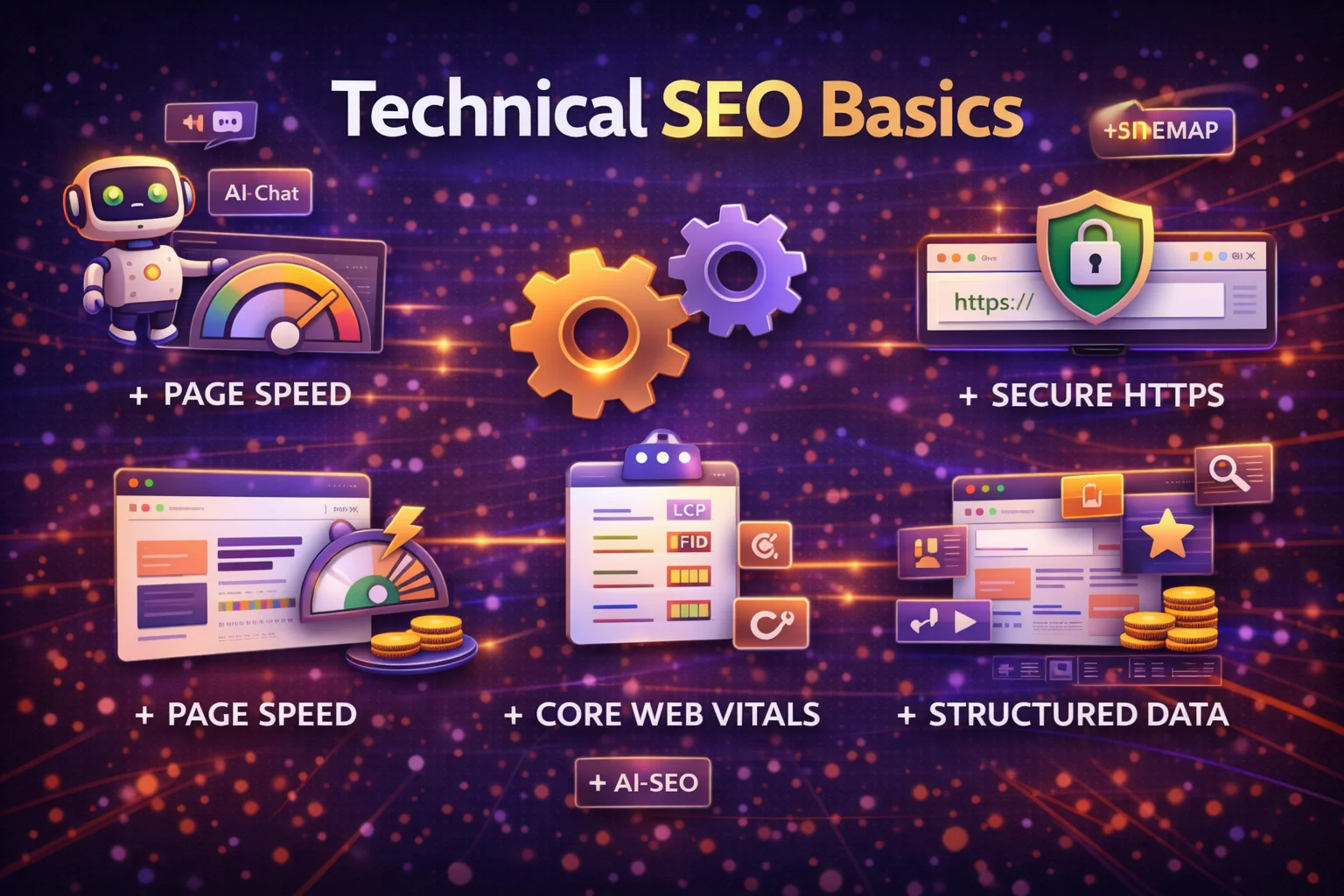
Search engine optimization involves many different strategies, but technical SEO forms the foundation that allows search engines to properly crawl, understand, and rank your website. Without a solid technical structure, even the best content may struggle to perform well in search results.
Technical SEO focuses on optimizing the backend infrastructure of a website so search engines can efficiently access and index its pages. While on-page SEO deals with content and keywords, technical SEO ensures that the website itself is structured in a way that search engines can interpret correctly.
For beginners, technical SEO might sound complex, but the core principles are straightforward once you understand the key components. In this guide, we’ll explore technical SEO basics, why it matters in 2026, and how to optimize your website step-by-step to improve visibility in search engines.
What Is Technical SEO?
Technical SEO refers to the process of improving the technical aspects of a website so search engines can crawl, index, and render pages efficiently.
Search engines rely on automated bots to scan websites and gather information about their content. If a site has technical issues such as slow loading speeds, broken links, or poor structure, these bots may struggle to access the pages.
Technical SEO addresses issues such as:
- website speed
- mobile responsiveness
- website architecture
- crawlability and indexing
- security (HTTPS)
- structured data
By resolving these technical factors, websites can improve their chances of ranking higher in search results.
Why Technical SEO Is Important in 2026
Search engines have become increasingly sophisticated in evaluating websites. In 2026, ranking algorithms rely heavily on factors related to user experience, page performance, and accessibility.
Here are several reasons why technical SEO is essential.
1. Helps Search Engines Crawl Your Website
Search engines discover content through crawling. If your site structure prevents bots from accessing pages, those pages may never appear in search results.
2. Improves User Experience
Technical improvements such as faster loading speeds and mobile-friendly design create a better experience for visitors.
Better user experiences often lead to higher engagement and improved rankings.
3. Supports Modern Search Algorithms
Modern search engines evaluate website performance through metrics such as Core Web Vitals, which measure loading speed, visual stability, and responsiveness.
4. Strengthens Overall SEO Strategy
Technical SEO works alongside content and backlink strategies to create a well-optimized website.
Without technical optimization, other SEO efforts may produce limited results.
How Search Engines Crawl and Index Websites
Understanding how search engines work is essential for technical SEO.
Search engines generally follow three steps:
Crawling
Search engine bots explore the web by following links between pages. These bots collect information about website content and structure.
Indexing
After crawling a page, the search engine analyzes its content and stores it in a massive database known as the index.
Ranking
When users search for information, the search engine retrieves relevant pages from its index and ranks them based on hundreds of factors.
Technical SEO ensures that your website is easy to crawl, index, and understand during these processes.
Key Elements of Technical SEO
Technical SEO includes several important components that help search engines access and evaluate websites effectively.
Website Speed and Performance
Page speed is one of the most important technical SEO factors.
Slow websites frustrate users and increase bounce rates. Search engines also consider loading speed when determining rankings.
Ways to improve page speed include:
- compressing images
- minimizing CSS and JavaScript files
- using fast hosting
- enabling browser caching
- implementing a content delivery network (CDN)
Faster websites not only improve SEO but also enhance user satisfaction.
Mobile-Friendly Design
More than half of global web traffic now comes from mobile devices.
Search engines use mobile-first indexing, meaning they evaluate the mobile version of a website when determining rankings.
A mobile-friendly website should:
- display properly on small screens
- use responsive layouts
- maintain readable text sizes
- include easy navigation
Ensuring mobile compatibility is essential for both SEO and user experience.
Website Structure and Architecture
A well-organized website structure helps search engines understand how pages relate to each other.
Good website architecture typically follows a logical hierarchy.
Example structure:
Homepage
→ Category pages
→ Subcategory pages
→ Individual content pages
This structure helps search engines crawl pages efficiently and distribute authority throughout the site.
Internal linking also plays an important role in strengthening site architecture.
XML Sitemap
An XML sitemap is a file that lists all important pages on a website.
It helps search engines discover content more efficiently and understand the structure of your website.
Submitting a sitemap to search engines ensures that new pages are indexed faster.
Most modern content management systems automatically generate XML sitemaps.
Robots.txt File
The robots.txt file provides instructions to search engine bots about which pages they can or cannot crawl.
This file is useful for preventing bots from accessing:
- duplicate content pages
- administrative areas
- staging environments
However, it is important to configure robots.txt carefully to avoid accidentally blocking important pages.
Secure HTTPS Connection
Security is another critical technical SEO factor.
Websites using HTTPS encryption protect user data and establish trust with visitors.
Search engines consider HTTPS a ranking signal, meaning secure websites may receive better visibility in search results.
Most modern hosting providers offer SSL certificates that enable HTTPS connections.
Structured Data and Schema Markup
Structured data helps search engines better understand the meaning of website content.
Schema markup allows websites to provide additional context about their pages.
Examples include:
- product information
- reviews and ratings
- FAQs
- events
Structured data can also enable rich snippets, which display additional information in search results and improve click-through rates.
Core Web Vitals
Core Web Vitals are a set of metrics that evaluate user experience based on three factors:
Largest Contentful Paint (LCP)
Measures how quickly the main content loads.
First Input Delay (FID)
Measures how responsive a page is when users interact with it.
Cumulative Layout Shift (CLS)
Measures visual stability and layout changes during page loading.
Improving these metrics can enhance both user experience and SEO performance.
Crawl Errors and Broken Links
Broken links and crawl errors can negatively affect search engine performance.
Common crawl issues include:
- 404 errors
- broken internal links
- redirect chains
Regular website audits help identify and fix these problems.
Maintaining a healthy link structure ensures search engines can navigate your website effectively.
Duplicate Content
Duplicate content occurs when multiple pages contain identical or very similar content.
Search engines may struggle to determine which version should appear in search results.
Solutions include:
- canonical tags
- redirects
- proper URL structure
Managing duplicate content helps consolidate ranking signals and improve visibility.
Internal Linking Strategy
Internal links connect related pages within your website.
These links help search engines:
- discover new pages
- understand topic relationships
- distribute authority across pages
A strong internal linking strategy also encourages visitors to explore additional content on your site.
Technical SEO Tools
Several tools can help monitor and improve technical SEO performance.
Common tools include:
- website audit platforms
- performance monitoring tools
- search console dashboards
- page speed analyzers
These tools analyze websites and identify technical issues that require attention.
Regular audits ensure your website remains technically optimized.
Common Technical SEO Mistakes
Many beginners overlook technical issues that can impact rankings.
Here are some common mistakes to avoid.
Slow Website Performance
Slow loading speeds reduce user engagement and negatively affect rankings.
Poor Mobile Optimization
Websites that do not function well on mobile devices may struggle in search results.
Missing XML Sitemaps
Without a sitemap, search engines may miss important pages.
Broken Links
Broken links can harm both user experience and crawlability.
Addressing these issues early can prevent long-term SEO problems.
Technical SEO Trends in 2026
Technical SEO continues evolving alongside search engine technology.
Several trends are shaping the future of website optimization.
AI-Driven Search
Search engines increasingly rely on AI to interpret content and understand context.
Performance-Focused Ranking Signals
User experience metrics such as page speed and interactivity remain essential.
Structured Data Expansion
Search engines are using structured data more extensively to generate enhanced search results.
Site Architecture and Topical Authority
Websites with clear structure and comprehensive topic coverage perform better in search rankings.
Final Thoughts
Technical SEO is a crucial part of building a successful website. While content and backlinks play major roles in SEO, technical optimization ensures that search engines can properly access and evaluate your website.
By focusing on factors such as website speed, mobile optimization, structured data, and crawlability, beginners can create a strong technical foundation that supports long-term SEO growth.
As search engines continue evolving in 2026, websites that prioritize performance, accessibility, and user experience will be better positioned to achieve higher rankings and attract sustainable organic traffic.
With consistent monitoring and improvements, technical SEO can become one of the most powerful tools for improving your website’s visibility and overall online success.
FAQ’s
1. What is technical SEO?
Technical SEO refers to optimizing the technical aspects of a website—such as page speed, mobile friendliness, indexing, and site structure—to help search engines crawl and rank pages more effectively.
2. Why is technical SEO important for ranking on Google?
Technical SEO ensures search engines can access, crawl, and index your website properly. Without technical optimization, even high-quality content may struggle to rank in search results.
3. What are the most important technical SEO factors?
Key technical SEO factors include website speed, mobile optimization, secure HTTPS connection, XML sitemaps, structured data, internal linking, and Core Web Vitals performance.
4. How can beginners improve technical SEO?
Beginners can improve technical SEO by optimizing website speed, fixing broken links, submitting XML sitemaps, ensuring mobile responsiveness, and monitoring site performance through SEO tools.
5. Does technical SEO still matter in 2026?
Yes, technical SEO remains essential in 2026 because search engines prioritize fast, secure, mobile-friendly websites that provide a strong user experience.